
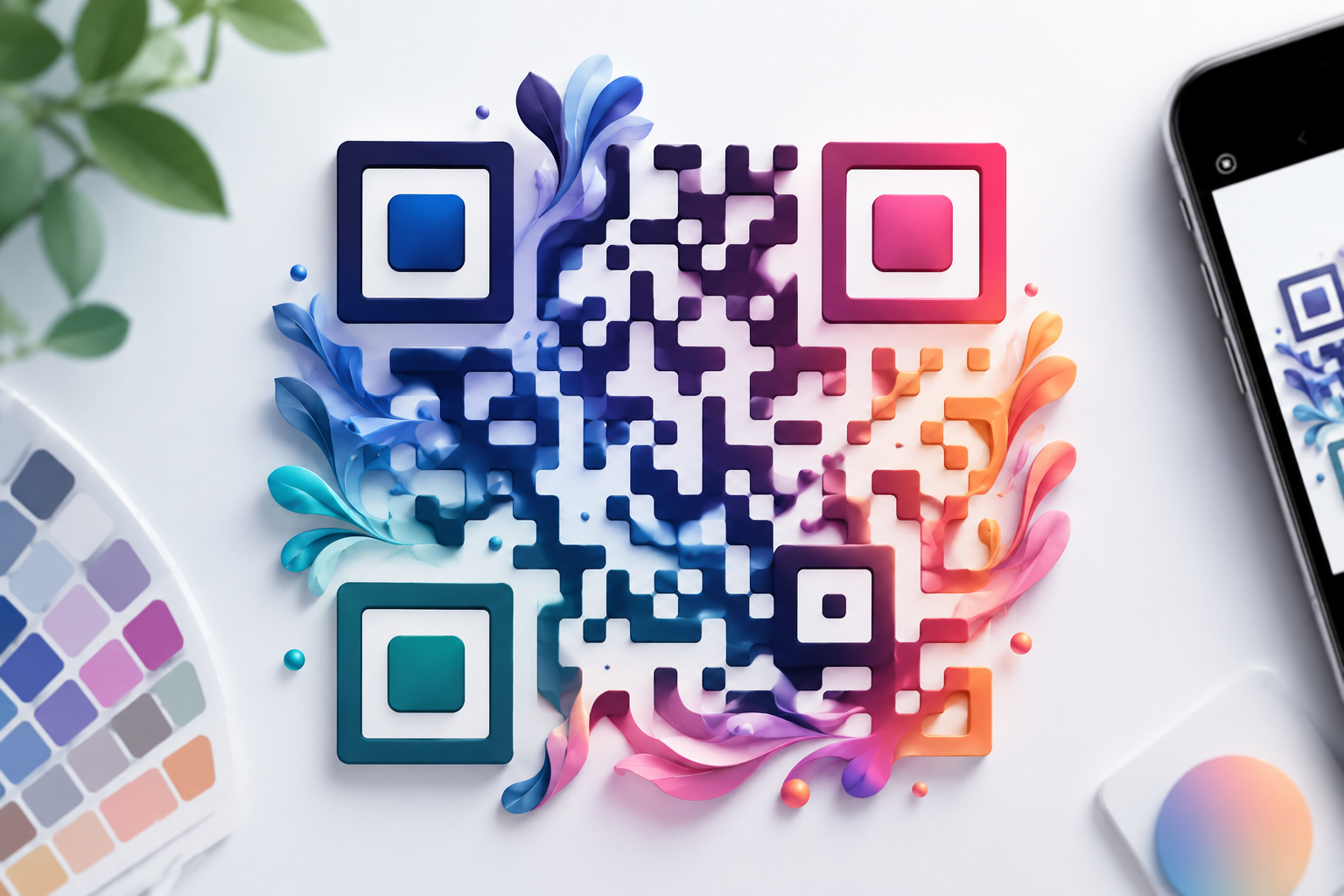
QR codes have long been far from just an instrument for quickly accessing a link. They are now gaining popularity in the fields of corporate image, advertising, and digital customer interaction.
QR codes have long been far from just an instrument for quickly accessing a link. They are now gaining popularity in the fields of corporate image, advertising, and digital customer interaction. Artificial intelligence has taken traditional black-and-white QR codes to a new level of visual design. Modern technology can not only create a unique picture but also ensure the proper operation of the code.
Just a few years ago, designers had limited options for QR code customization. It was possible to use different colors, add a company logo, or even change the shapes of individual code components, but making too many changes reduced scalability.
Thanks to generative AI, the process has become much easier. Nowadays, the system scans the code structure and identifies zones that can be used artistically without compromising functionality. In the end, you get an image that will serve two functions at once – both a functional QR code and a design element.
With modern technologies, any artistic style can be integrated into the design. It may be minimalism, futurism, watercolor paintings, geometric images, or a company's unique visual identity. But artificial intelligence considers technical aspects and aims to maintain reliable scanning performance.
This technique is especially effective in marketing, since people pay attention to unusual images more than to ordinary black-and-white squares.
Using the AI Generate QR Code tool allows organizations to implement automated QR code creation alongside the contemporary features of generative design technology. It provides an opportunity to create unique ideas without developing elaborate graphics.
It is also worth noting the time factor. While designers used to spend hours or even days developing different design options before, modern artificial intelligence can suggest dozens of ideas within several minutes.
Modern AI QR code generators result from the integration of computer vision, machine learning algorithms, and generative image models.
At first, the generator creates a traditional QR code pattern that contains all the necessary information – a website URL, text, contact information, or any other digital content. Then, the artistic creation process starts.
The algorithm determines the following zones:
Because of this kind of analysis, artificial intelligence manages to create unique designs without altering the inner structure.
Also, modern systems take into account a great number of variables:
In most cases, the generation process takes place in a few steps. After each alteration, the algorithm checks whether the QR code can be scanned successfully. If the probability of a successful scan decreases, changes occur.
In some cases, several AI models are used together. There is one model that handles the artistic side of the process, another that assesses image quality from a technical perspective, and a third that predicts the behavior of different scanning apps. Such an approach greatly enhances the efficiency of the result obtained.
These technologies are being developed due to the growing popularity of personalized digital content. Nowadays, users receive tons of advertising each day; thus, standard approaches are losing their effectiveness. A unique design will make the interaction more emotional.
What is more, generative algorithms enable experimenting with numerous design ideas. In this way, a company can adapt its design to a particular audience, season, or event. For instance, a bright, lively design suits a young brand, while an innovative visual concept suits a financial company.
Any business sector can use modern QR code-generating technologies, yet in some sectors, they are especially useful.
Marketing agencies use creative visual solutions to make their campaigns more effective. An attractive visual appearance helps QR codes blend well into banners, create advertising campaigns, and digital content.
Generative design is used by retailers to create an attractive product package. Rather than just a square, customers see a beautiful visual element that integrates harmoniously with the product design.
The hotel industry receives additional opportunities thanks to the generative design of QR codes. They can be found on room cards, menus, advertising materials, and information boards, and they also represent the company's identity.
Such technologies are especially popular in the following business sectors:
These solutions are also widely used in digital content creation. In this case, the authors use unique QR codes to attract visitors to their social networks, portfolios, video materials, or websites.
Working with brand creation enables organizations to develop a visual style, with the QR code becoming part of the corporate identity.
Apart from purely aesthetic benefits, there is another one. The unusual appearance of this content element makes visitors interested in it.
It should be noted separately that the use of these technologies is in the context of event organization. Unique options can be placed on tickets, invitations, and other promotional materials for the event. Not only does it provide quick access to additional information, but it also serves as a design element that complements the event's atmosphere.
Finally, the educational sphere is also getting new opportunities due to this technology. For example, QR codes can be applied to educational materials, interactive activities, and digital catalogs. Because of their unusual appearance, QR codes can encourage students in seeking additional resources.
Regardless of its aesthetic appeal, the primary role of the QR code is accurate information decoding. Thus, when using artificial intelligence, certain rules should be considered.
The first rule suggests maintaining appropriate contrast between the main components of the image and the background. No artistic techniques should reduce the legibility of modules.
Also, it is necessary to maintain white space around the image. The "quiet zone" enables apps to quickly identify the QR code's boundaries.
Additionally, it is advised to follow a set of recommendations:
It is recommended to perform a set of tests after generation. They need to be tested on both modern smartphones and older models because of differences in camera quality and recognition algorithms.
When using color variants, ensure that the hues used do not reduce the image's contrast. It applies mainly to the pastel colors and gradients.
As for the file format, PNG and SVG are appropriate for digital material, and vector images, which remain sharp no matter how they are scaled, are preferred for professional printing.
If the code will be used on product packaging, advertisements, banners, or printed materials, it would be wise to test it in the final layout. In this way, one can ensure that printing conditions will not affect recognition quality.
Testing the efficiency of the created solutions is a vital stage. Even the perfect code can behave differently depending on where it is located. For example, the same image used on the smartphone screen, advertising poster, and product packaging can have different usage conditions. That is why it is recommended not only to pay attention to the code itself but also to the context in which it is used.
Another benefit of using modern technological tools is the ability to make rapid changes to the concept without having to redo the whole project. In cases where it is necessary to modify the concept for another advertising campaign or to align with corporate identity, artificial intelligence can greatly reduce preparation time. It becomes particularly useful for companies that have a high frequency of new product releases or seasonal campaigns.
These technologies will develop even faster in the future. QR codes will become even more interactive, merging visual effects with new personalization features.
The use of modern AI-based tools enables the merging of technology and design. QR codes have become a full participant in brand visual communication, not just a technical feature but a part of it. If done correctly, it is possible to achieve both functionality and visual appeal at once.
Ready to create your first QR code? Start free on ConnectQR - no credit card required.
Create dynamic QR codes with real-time analytics. No credit card required.
Start for Free →