
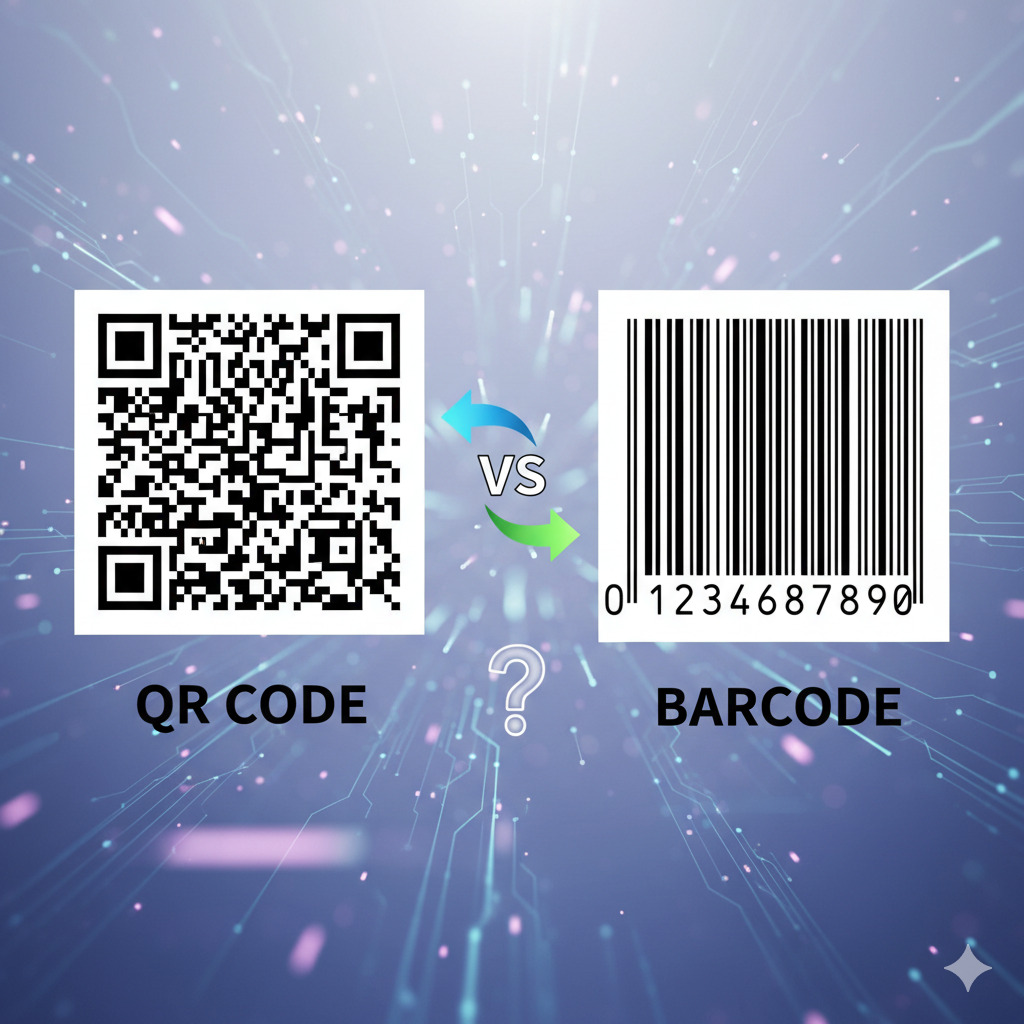
The discussion around qr code vs barcode has become increasingly important as businesses shift toward more advanced ways of sharing product information, tracking inventory, and connecting physical products to digital experiences. While both technologies are used to store and retrieve data, they serve different purposes and offer different capabilities.
The discussion around qr code vs barcode has become increasingly important as businesses shift toward more advanced ways of sharing product information, tracking inventory, and connecting physical products to digital experiences. While both technologies are used to store and retrieve data, they serve different purposes and offer different capabilities.
Today, QR codes are expanding beyond traditional scanning applications and becoming part of the modern digital ecosystem for product packaging, marketing, and supply chain tracking. Businesses are also exploring systems such as GS1 Digital Link technology that connect products directly to online information through advanced QR codes. Tools such as the https://www.connectqr.io/gs1-digital-link platform allow organizations to create next-generation QR codes designed for global product identification and digital interaction.
Understanding the difference between barcode and qr code helps businesses decide which technology best fits their operational needs. This article explores how barcodes and QR codes work, how they differ, and why many companies are transitioning to QR-based systems.
The difference between barcode and qr code begins with how the information is stored and how scanners interpret that information.
A barcode is a one-dimensional code consisting of vertical lines of varying widths and spacing. These lines represent numerical or alphanumeric data that can be read by a barcode scanner. Barcodes have been widely used in retail environments for decades, particularly for product identification at checkout.
A QR code, on the other hand, is a two-dimensional matrix code made up of small black squares arranged in a grid pattern. Unlike traditional barcodes, QR codes can store significantly more data and can be scanned from multiple angles.
Barcodes and QR codes differ primarily in how they store data.
Barcodes store data horizontally in a linear format. This limits the amount of information that can be encoded.
QR codes store data both horizontally and vertically, allowing them to hold much larger amounts of information.
This structural difference allows QR codes to include URLs, contact information, product data, or event registration links.
Another major difference lies in data capacity.
Traditional barcodes typically store around 20–25 characters of data, often limited to numeric values used for product identification.
QR codes can store thousands of characters, including:
This expanded capacity makes QR codes more versatile for modern applications.
QR codes include built-in error correction technology. This means that even if part of the code is damaged or obscured, the scanner can still recover the information.
Barcodes generally do not include this feature. If part of the barcode is damaged, the scanner may fail to read it.
Many people ask the question: is a qr code a barcode?
Technically, the answer is yes and no.
A QR code belongs to a broader category known as two-dimensional barcodes. While traditional barcodes are one-dimensional, QR codes expand the concept by storing information in both directions.
In other words, QR codes are considered an advanced form of barcode technology.
Traditional barcodes were designed primarily for retail and inventory tracking. They are simple, reliable, and efficient for scanning product identifiers.
Examples include:
These codes link to databases that store product information.
QR codes represent the next generation of barcode technology. They can store more complex data and connect directly to digital systems.
This capability allows QR codes to be used for:
Because of their flexibility, QR codes are now used across many industries.
Another common question is can barcode reader read qr code.
The answer depends on the type of scanner being used.
Traditional barcode scanners are designed specifically to read one-dimensional barcodes. These devices use laser scanning technology to interpret linear patterns.
Most older barcode readers cannot scan QR codes because they are not designed to interpret two-dimensional patterns.
Newer scanners often use imaging technology rather than laser scanning. These devices capture an image of the code and interpret the pattern digitally.
Imaging scanners can read both:
Because of this capability, many businesses are upgrading their scanning equipment to support both technologies.
One of the reasons QR codes have become so popular is that they can be scanned using smartphone cameras.
Modern smartphones automatically detect QR codes and open the associated link or information.
This eliminates the need for specialized hardware in many situations.
As technology evolves, many organizations are looking to convert barcode to qr code systems to take advantage of the additional capabilities offered by QR codes.
Traditional barcodes are still widely used in retail and logistics, but QR codes offer several advantages that support modern digital interactions.
QR codes can link directly to product information pages that include:
This allows companies to provide customers with more information without expanding packaging labels.
QR codes can also improve supply chain tracking. Each scan can provide access to information about a product’s origin, manufacturing process, and distribution.
This transparency helps companies maintain compliance with international standards.
Unlike static barcodes, some QR codes can be dynamic. This means the destination content can be updated without changing the printed code.
Businesses can update product information, marketing campaigns, or instructions without reprinting packaging.
Modern companies increasingly rely on barcode generator qr code platforms to create advanced QR codes that support digital product identification.
These systems allow businesses to generate QR codes connected to GS1 Digital Link standards.
GS1 Digital Link is a global standard that allows products to connect directly to digital information through QR codes.
Instead of simply identifying a product number, the QR code links to an online database that provides detailed product information.
This technology supports:
Using a gs1 qr code generator allows businesses to create standardized QR codes that work across global supply chains.
Benefits include:
These QR codes can serve both supply chain operations and consumer-facing applications.
The evolution from traditional barcodes to QR codes is transforming how businesses interact with products and customers.
QR codes allow brands to provide additional product information without changing packaging design.
Customers can scan a code to access:
QR codes are widely used in marketing because they bridge the gap between physical materials and digital experiences.
Examples include:
QR codes help track products throughout the supply chain, providing visibility from manufacturing to retail.
This improves efficiency and accountability.
Some companies use QR codes to verify product authenticity.
Scanning a code allows consumers to confirm that the product is genuine and view official product information.
The shift from traditional barcode systems toward QR-based solutions reflects broader changes in digital technology and global commerce.
Many industries are adopting QR codes because they provide greater flexibility and support for digital interactions.
New standards such as GS1 Digital Link allow businesses to create unified product identification systems that connect physical goods with digital data.
This transformation helps companies improve transparency, enhance customer experiences, and manage supply chains more effectively.
The debate surrounding qr code vs barcode highlights the evolution of product identification technologies. While barcodes remain widely used in retail and logistics, QR codes provide expanded capabilities that support modern digital ecosystems.
Understanding the difference between barcode and qr code helps businesses choose the right technology for theirR codes represent a more advanced form of data encoding.
Question needs. Although is a qr code a barcode can technically be answered yes in a broader sense, Qs such as can barcode reader read qr code depend on scanning technology, but modern imaging scanners and smartphones now support both formats.
As companies continue to convert barcode to qr code systems, advanced tools such as barcode generator qr code platforms and gs1 qr code generator solutions are helping organizations implement next-generation identification systems that connect products to the digital world.
Ready to create your first QR code? Start free on ConnectQR - no credit card required.
Create dynamic QR codes with real-time analytics. No credit card required.
Start for Free →