
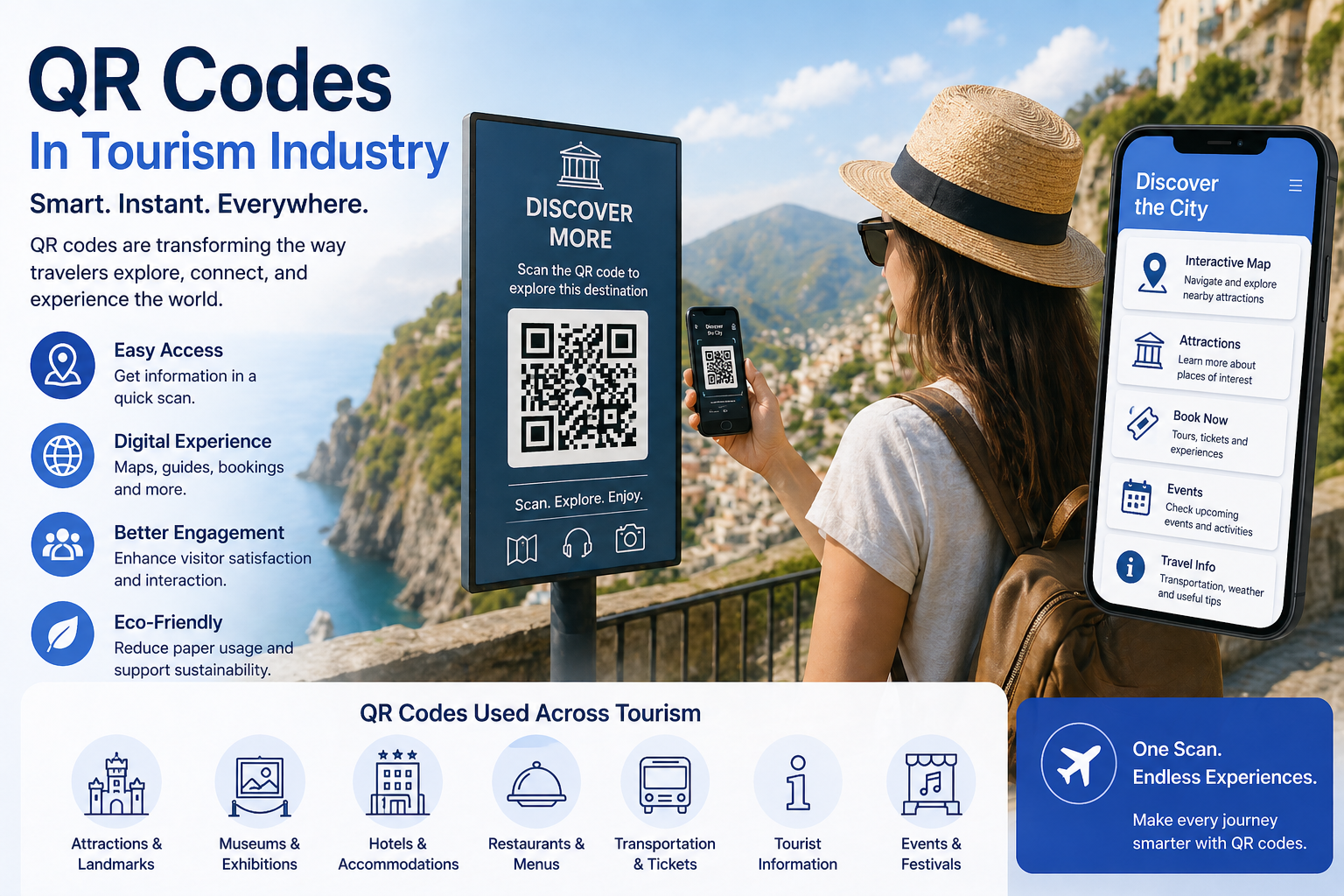
The tourism industry has always depended on information—guiding travelers, simplifying navigation, and helping people discover new places. In recent years, digital tools have transformed how this information is delivered, and one of the most effective solutions is the use of QR codes.
The tourism industry has always depended on information—guiding travelers, simplifying navigation, and helping people discover new places. In recent years, digital tools have transformed how this information is delivered, and one of the most effective solutions is the use of QR codes.
Today, qr codes in tourism industry applications go far beyond simple links. They are used to connect travelers with interactive maps, digital guides, booking systems, and real-time updates. With just a quick scan, visitors can access everything they need without relying on printed materials or staff assistance.
Platforms like qr codes for tourism show how QR codes can be integrated into a complete digital experience. From attractions and museums to hotels and transportation systems, QR codes help streamline communication and enhance the overall journey.
As tourism continues to evolve, QR codes are becoming a key tool for creating seamless, engaging, and efficient travel experiences.
The role of qr codes for tourism is centered around accessibility and convenience. Travelers often need quick access to information, whether it’s directions, schedules, or details about a location. QR codes provide an immediate solution without requiring downloads or complex navigation.
For example, a visitor arriving at a historical landmark can scan a QR code to learn about its history, view images, or listen to an audio guide. Instead of relying on printed brochures or physical signage, all the information is delivered directly to their device.
This approach also benefits tourism operators. By using QR codes, they can update content in real time, ensuring that travelers always receive accurate and relevant information. This is especially useful for seasonal attractions, changing schedules, or temporary exhibitions.
Another advantage of qr codes for tourism is their ability to support multiple languages. Digital content can be adapted for different audiences, making destinations more accessible to international visitors.
In practice, QR codes create a bridge between physical locations and digital experiences, making travel more intuitive and informative.
The concept of qr code tourism reflects a broader shift toward digital-first travel experiences. Instead of relying on traditional methods, travelers now expect instant access to information through their smartphones.
QR codes are being used in a variety of ways across the tourism sector. Hotels use them for contactless check-ins and service requests. Restaurants in tourist areas use them for digital menus. Transportation hubs use them for schedules and ticketing information.
In cities, QR codes are often placed on streets, monuments, and public spaces to provide contextual information. A simple scan can reveal stories, historical facts, or recommendations for nearby attractions.
What makes qr code tourism particularly effective is its ability to enhance the visitor experience without adding complexity. Travelers do not need to install apps or search for information manually. Everything is available instantly through a scan.
This simplicity is one of the main reasons QR codes have been widely adopted across the tourism industry.
The usage of qr code in tourism industry spans multiple areas, each contributing to a more efficient and engaging experience.
In cultural sites such as museums and galleries, QR codes are used to provide detailed descriptions, multimedia content, and guided tours. Visitors can explore exhibits at their own pace while accessing rich information that goes beyond what is displayed physically.
In hospitality, QR codes streamline operations by enabling digital check-ins, room service requests, and customer feedback. This reduces the need for physical interaction while improving service efficiency.
In transportation, QR codes simplify ticketing and navigation. Travelers can access boarding passes, route maps, and real-time updates without relying on printed documents.
Retail and souvenir shops in tourist areas also benefit from QR codes by offering additional product information, promotions, or online purchasing options.
As noted in , QR code technology enables tracking and analytics, allowing businesses to understand user behavior and optimize their services. This data-driven approach helps improve both operational efficiency and customer satisfaction.
Overall, the usage of qr code in tourism industry is not limited to one function—it is a versatile tool that supports multiple aspects of the travel experience.
A tourism qr code is more than just a technical feature—it is a strategic tool for improving communication and engagement.
For travelers, it offers convenience and accessibility. Information is available instantly, without the need for physical materials or additional assistance. This makes the travel experience smoother and more enjoyable.
For businesses and destinations, a tourism QR code provides flexibility. Content can be updated in real time, allowing operators to respond quickly to changes or new opportunities.
It also opens the door to personalization. QR codes can be used to deliver targeted content based on location, time, or user behavior. This creates a more relevant and engaging experience for visitors.
In addition, tourism QR codes support sustainability efforts. By reducing the need for printed materials, they help minimize waste while maintaining high-quality information delivery.
The growing use of QR codes in tourism reflects a broader trend toward digital integration. As travelers become more accustomed to mobile-first experiences, QR codes will continue to play a central role in shaping how information is accessed and shared.
The rise of qr codes in tourism industry applications highlights a fundamental shift in how travel experiences are designed and delivered. QR codes provide a simple yet powerful way to connect physical locations with digital content, making information more accessible and interactive.
From qr codes for tourism that guide visitors through destinations to qr code tourism solutions that enhance convenience, the impact of this technology is widespread. The usage of qr code in tourism industry continues to expand, supporting everything from cultural experiences to transportation and hospitality.
A well-implemented tourism qr code improves both efficiency and engagement, benefiting travelers and businesses alike.
As the tourism industry continues to evolve, QR codes will remain an essential tool for creating smarter, more connected, and more sustainable travel experiences.
Ready to create your first QR code? Start free on ConnectQR - no credit card required.
Create dynamic QR codes with real-time analytics. No credit card required.
Start for Free →